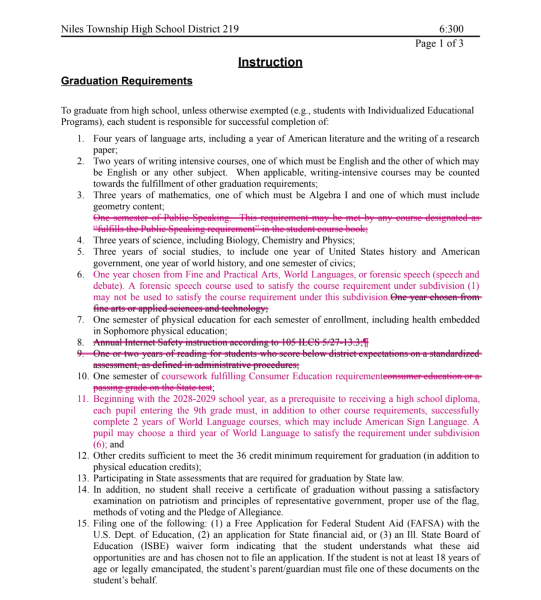
Students will no longer be required to earn a public speaking credit effective with the class of 2027. In addition, ninth graders entering the district in the 2028-2029 school year will be required to take at least two years of a world language in order to graduate, a requirement introduced by the Illinois State Board of Education (ISBE) for all public school districts to adopt.
The public speaking requirement was a local requirement, rather than one put forth by the ISBE. Assistant Superintendent for Curriculum and Instruction Christine Gonzales argued that omitting the public speaking requirement gives students more choice.
“I have always been a firm believer in empowering students to pursue their dreams, desires and passions. More requirements often leads to more restrictions on student choice,” Gonzalez said. “The requirements approved by the Board of Education in November are aligned to college entrance for most public universities in Illinois and provide students with more choice in selecting courses that are aligned to their college and career pathway.”
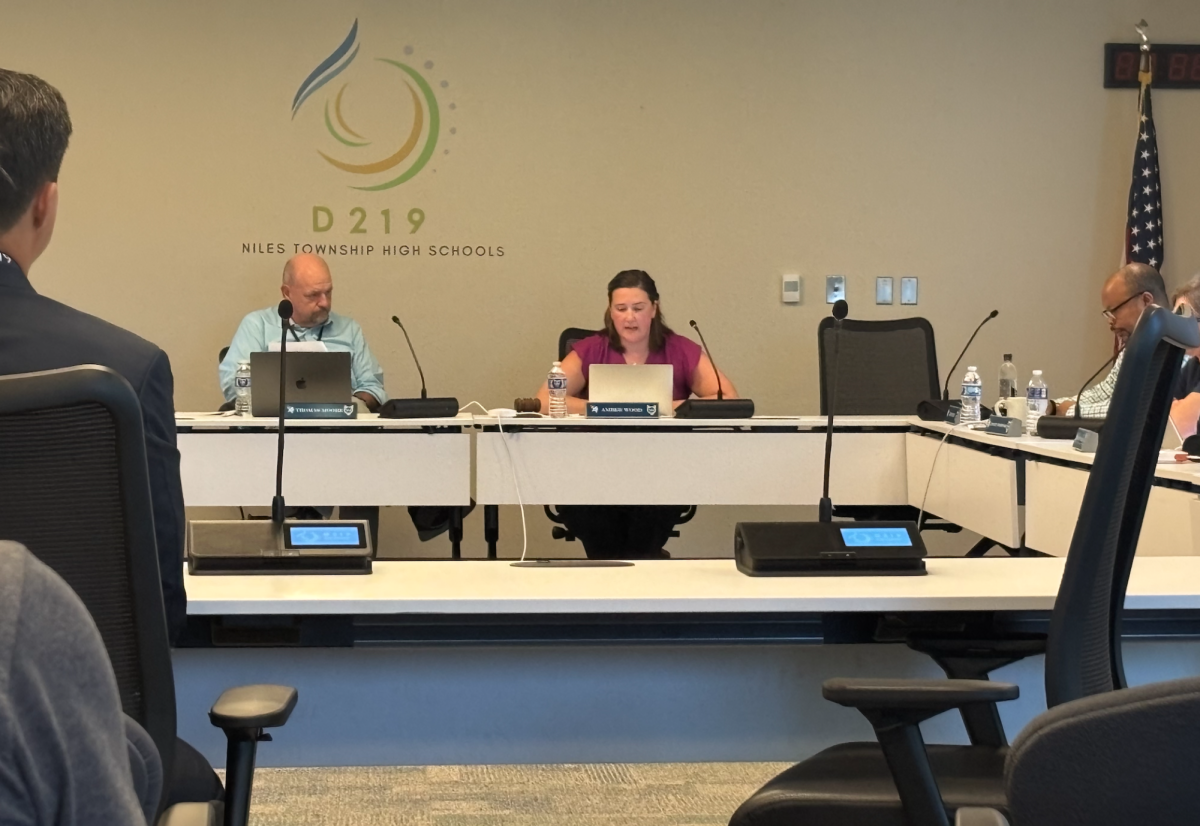
The Board voted unanimously to approve the changes. D219 Board President Amber Wood believes that this change will allow students more flexibility in registering for which courses they want to take.
“We know that in the curriculum many classes are already encouraging public speaking,” Wood said. “I do think that it’s one of those life skills that we as a district need to think about making sure it’s a part of the curriculum. I think it is already.”
Kristen Jackson teaches public speaking, an English elective, and believes that the removal of the public speaking requirement was a mistake.
“I think it’s a mistake because I think that having the requirement pushed students to do things that are outside of their comfort zone but also [would be] a benefit [to] them, both in high school and whatever path they take outside of high school,” Jackson said.
In terms of the world language class requirement, school counselor Ben Grais believes the world language requirement will be beneficial for students, especially those pursuing post-secondary education.
“A lot of colleges already require two years if not four years so it’s sort of built into your goals for college anyways,” Grais said. “I also believe that [with] future careers or majors, [it] benefits you to speak another language.”
Gonzalez still believes that this addition is valuable for those not planning on going to college.
“Regardless of whether or not you want to go to college right after high school, speaking additional languages will be beneficial,” Gonzalez said. “Certain languages play a big factor in certain careers. For those who enjoy traveling internationally, speaking additional languages will help you communicate with people and gain a better understanding of their culture and lifestyle.”