This story is part of the Niles West News 2026 Immigration Series, which documents community members’ experiences immigrating to the United States. Most of these stories are written by Niles West News writers, but some will feature guest writers who will tell their family’s story.
Many people choose to immigrate to America in pursuit of the well-known “American Dream.” They arrive with hopes and aspirations to build a better life for themselves and their families. My parents never planned for the American Dream to become their reality, they were forced into it. They were pushed out of their home country, Bosnia and Herzegovina, by war, pain and instability.

Both of my parents are from a small town in Bosnia called Kozarac. They spent their days going to school, stopping by the pekara, a local bakery, to buy bread and playing sports with friends. They lived a simple life with no intention of ever leaving Bosnia until war tore that life apart.
After the fall of Yugoslavia, Croatian, Serbian and Bosnian leaders competed over what they believed Bosnia’s future should look like. Bosnia had been a multi-religious country, primarily home to Muslim and Christian communities. Some leaders did not see this as acceptable and decided that Islam had no place in Bosnia. In the spring of 1992, Bosnian-Serb forces began a campaign of ethnic cleansing and put most of the Bosnian population into concentration camps. This violence ultimately led to tragedies such as the Srebrenica Genocide and the deaths of more than 100,000 people.
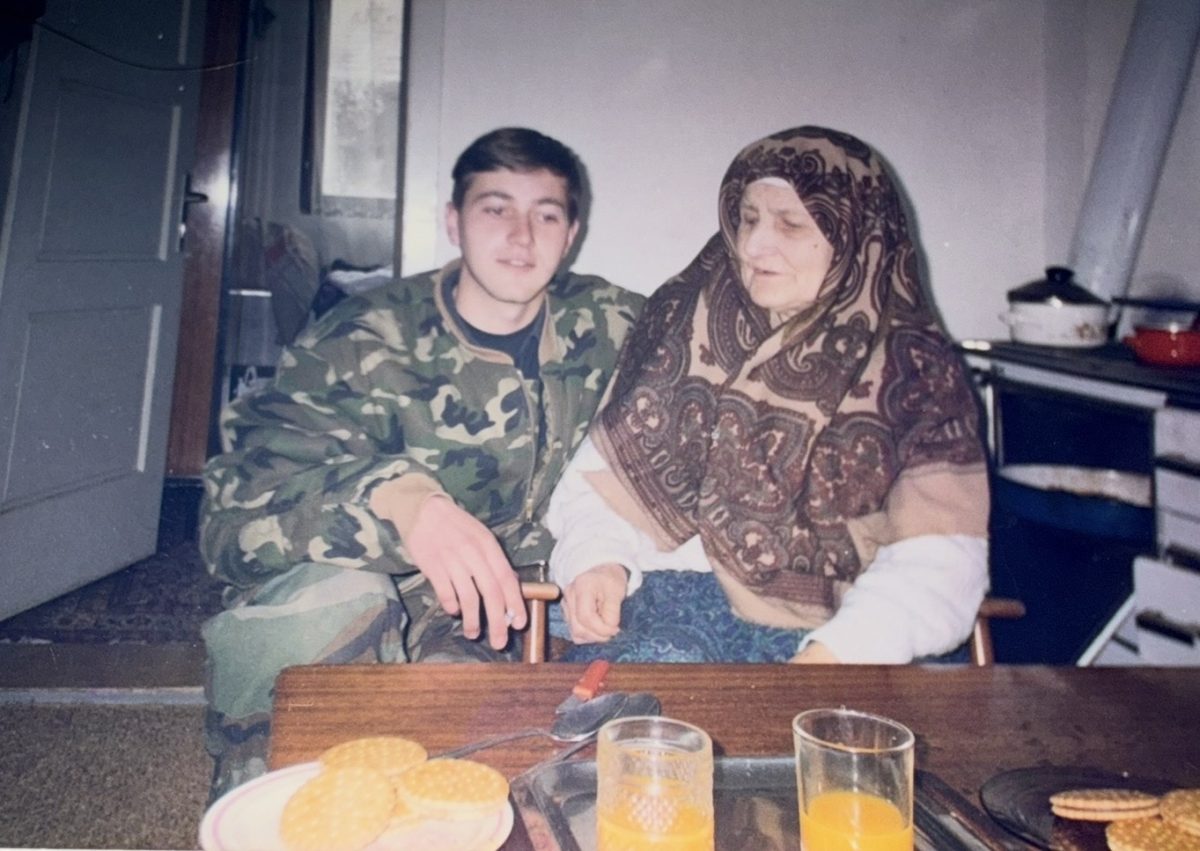
My dad, Damir Mahic, was just 17 years old when the war began. He and his family were placed in a concentration camp in their hometown. Eventually, his uncle was able to secure papers that allowed them to flee to Austria. At the Croatian border, however, my dad was separated from his parents and sister. They were able to escape to Spain, where they lived for three years before moving to the United States. My dad was sent back to a camp with other Bosnians who had attempted to flee.
After about a year, he was drafted into the war, as many men between the ages of 18 and 60 were.
“Then in 1993, I went to fight in the war,” Mahic said. “I fought for two and a half years. I was shot twice as well. Man, what a crazy life.”

He was in the town of Sanski Most when the war finally ended. When his parents came to visit him in Bosnia, they asked if he wanted to come to America. After he said yes, they sent the paperwork, and the process of immigrating to the United States took about three years.
“For a whole year, I was just waiting for a flight, a whole year,” Mahic said.
He arrived in America in 2001 when he was 26 and began taking English classes with other Bosnians who had recently fled the war. Nine months later, he got his first job at an airport, measuring boxes and inputting data. On his résumé, he listed previous experience as a mechanic, which opened new opportunities.
“After a few months, I was already a supervisor in the maintenance department for GSC,” Mahic said. “In 2008, my boss was going to retire and asked me and my cousin if we wanted to take over his business working with Lufthansa—taking care of their building and equipment—and here I am to this day.”

In 2002, my dad met my mom, Edina Mahic, who had already been in America for five years after fleeing the war herself when she was seventeen.
“I was working two jobs while in school at Northeastern, earning my bachelor’s in human resource development and sociology,” Edina Mahic said. “Because I had already been here for five years when I met your dad, I was pretty well off. I knew what I wanted in my life. I was doing well on my own; I had to be because your grandparents didn’t speak English, so I was pretty much on my own.”
Edin Kahrimanovic, my mom’s brother, is ten years younger than my dad. Because he was so young during the war, he learned a great deal from him.
“I’ve always seen him as an older brother,” Kahrimanovic said. “Everything he’s been through has made him so mature and able to see things from different perspectives.”
Going through a war shaped my entire family, but the lesson my dad took from the experience is the most powerful and speaks to who he is as a person.
“The one thing I think everyone needs to realize is that war is never the answer,” Mahic said. “I don’t wish anyone to ever go through that.”
Although my dad never planned for the “American Dream” to be his dream, he has worked harder than anyone that I know to build the life he has today. After nearly twenty-five years in America, he has created a professional career, a family and a future for his two daughters.