The list of available poems for the Poetry Out Loud (POL) recitation contest has been reduced from 1,300 to 400 for the upcoming season, a move that limits selections strictly to historical American works.
According to the National Endowment for the Arts (NEA), the government agency that sponsors POL, the changes are designed to commemorate the United States’ 250th anniversary, or semiquincentennial.
In a press release, the NEA stated that the 2025-2026 anthology poems were selected to “highlight American poets as well as poems that embody the nation’s indomitable spirit, creativity, innovation and the nation’s rich cultural and historical heritage.”
Because the new list focuses on older works, there is no longer a need to secure performance and streaming permissions from publishers and poets. The entire collection now consists of works in the public domain.
“All the poems are in the public domain, which means that they don’t need copyright approval from the individual poets and 95 years have passed since the poem was written,” POL co-sponsor Sally Graham said. “In the past, for example, if a poet doesn’t give approval for it to be recorded and so competitors couldn’t be showcased in a live recording.”
Former Niles West POL champion and senior Jaden Conley finds the change inhibiting.
“I feel that minimizing the selection of poems can be limiting for contestants,” Conley said. “Poetry is about individual expression, interpretation, and creativity, and restricting the options can unintentionally narrow the ways participants can showcase their unique voices. While I understand the intention may be to focus the competition, I believe that art thrives when people are given the freedom to explore and choose what resonates with them most.”
Students in English teacher Tyler Guerin‘s class had to reselect their chosen poems after the POL anthology was changed. Senior Ammar Quadri was no longer able to perform the poem that resonated with him.
“I personally look for poems about war and suffering because of the state of the world right now, and now when I searched up some poems, half were missing,” Quadri said. “I think [Poetry Out Loud] shouldn’t limit the poems at all, because that’s just cutting off people from things that resonate with them, because poems are written by authors that want to convey their emotions and when that poem is removed, students can’t find a poem to convey their feelings.”
Graham noted that the removal of modern works has made recruitment more difficult this year.
“Not as many people are interested in participating because the contemporary poets are so engaging and students can really identify with them,” Graham said. “These poems are definitely more challenging; these are older poems, but there are definitely some really cool poems still there.”
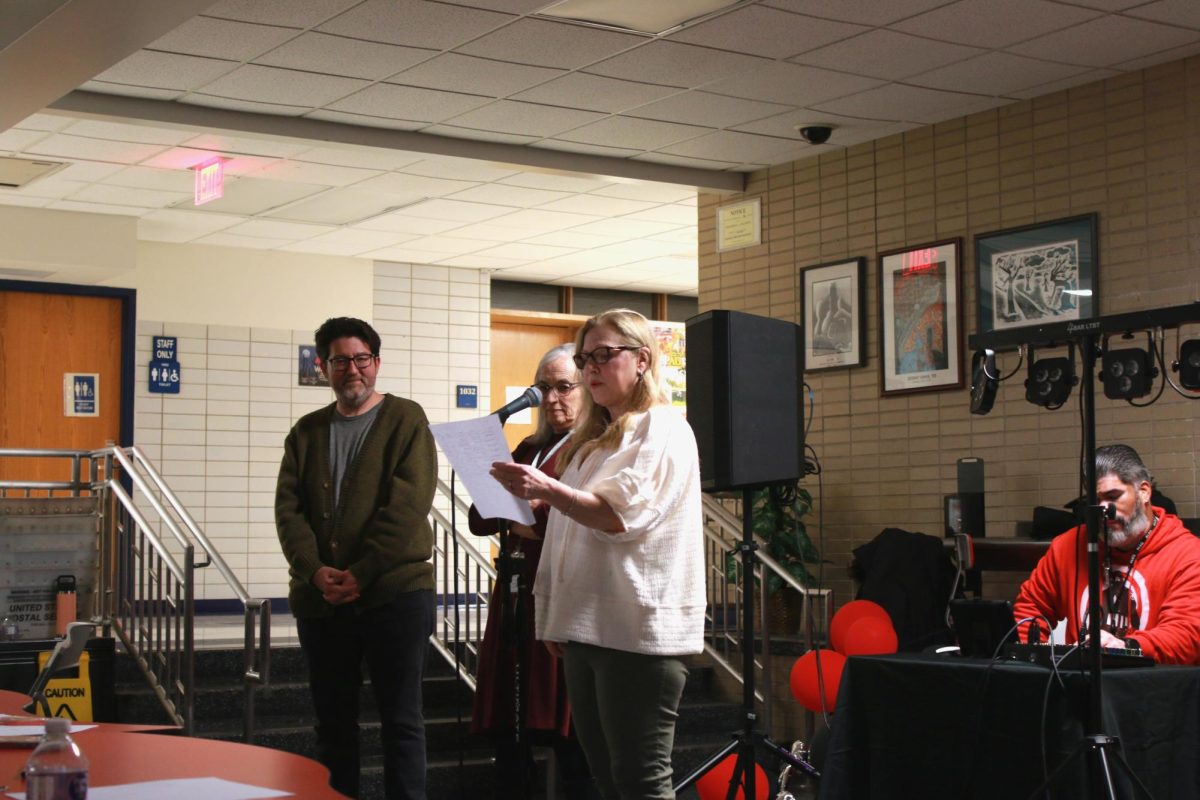
The schoolwide POL contest is on Thursday after school in room 2040.