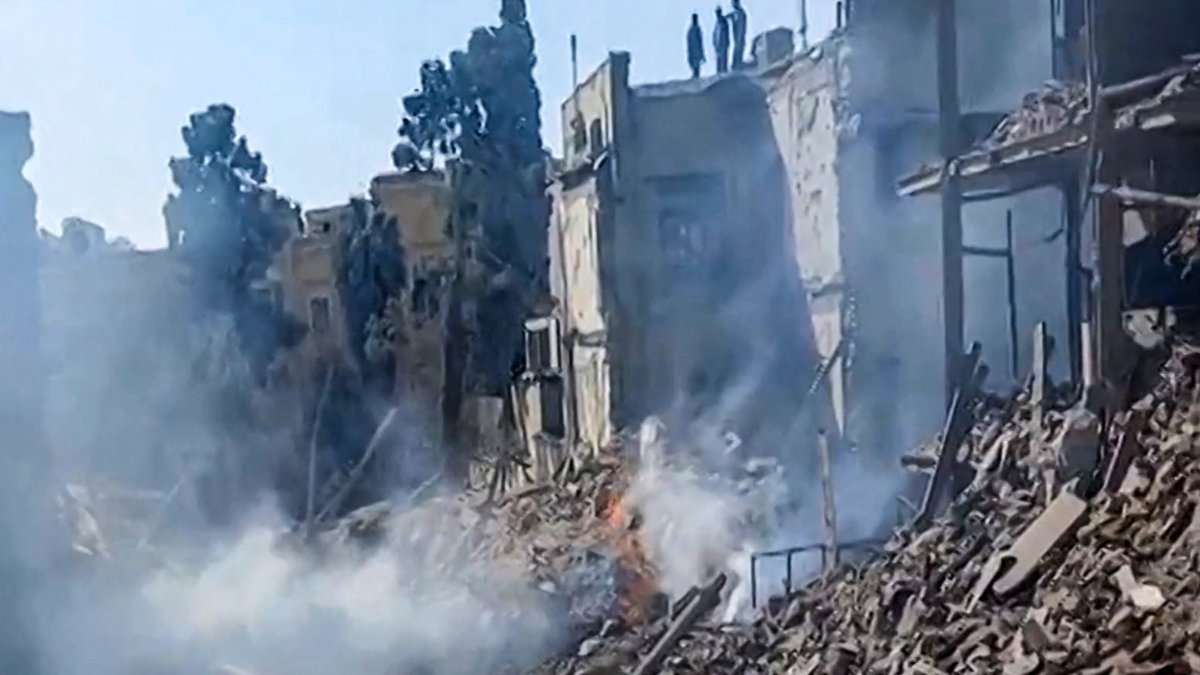
The U.S. and Israeli forces launched strikes on Iran on Feb. 28. They hit a government building, killing Supreme Leader Ayatollah Ali Khamenei and a girls elementary school. At least 100 young girls were killed in that strike. The conflict is still ongoing, as Iran and the U.S. still haven’t reached an agreement.
The current authoritarian regime that oversees Iran is the Islamic Republic of Iran. The regime’s crackdown is causing families to be concerned about their relatives and them being ripped apart, due to the shutdown of the internet and the constant fear of being taken as prisoners if they were to visit Iran.
Social studies teacher and MENA sponsor Daniel Kosiba explained that not only are so many people getting killed, but the regime in Iran is also isolating the people who still reside in their country.
“The Iranian civilians are suffering right now, not just because they’re getting killed by bombs that are hitting schools instead of military targets, but because the regime [of the Islamic Republic of Iran] is under attack,” Kosiba said. “They are censoring the internet and clamping down even harder on their people.”
Luisa Karimighovanloo, a Spanish teacher, is currently experiencing the distance this conflict has caused. Karimighovanloo’s dad is currently residing in Iran, but she has had very limited contact with him and isn’t able to visit him because of the conflict. Iran has taken many prisoners as leverage over the U.S., which has led to the US taking prisoners of their own.
“Prisoners are taken [from Iran] in exchange for other prisoners. I am sure there are Iranian prisoners [in the U.S.], also I am married to an American, so they could think that they could put me in prison and exchange for people they want,” Karimighovanloo said. “Since there is that fear, I don’t think [my family] would feel comfortable with me going [to Iran to visit my dad].”
Senior Hasan Hedayat’s family in Iran is also being affected by this conflict. Hedayat explained that his father is having a very hard time getting in touch with his family due to the internet being down. The internet was shut down shortly after the U.S. and Israeli bombing happened, which caused a lot of the confusion and lack of information given to those who reside outside of Iran.
“I asked my father what’s going on [with my family in Iran], but he said that he had no idea because of the internet being down,” said Hedayat.
While many West students are not following the events of the war, they are feeling the effects of rising gas prices resulting from Iran’s closing off the Strait of Hormuz, which led to the U.S. to create a blockade. Senior Elyse Tregoning is one of the many students affected by the rising gas prices, as she is responsible for her own transportation.
“I drive myself to school, practice and work. I’m responsible for my own transportation, and I also pay all my gas money myself,” Tregoning said. “So, it’s just been taking more and more of my paycheck, which has been very frustrating.”