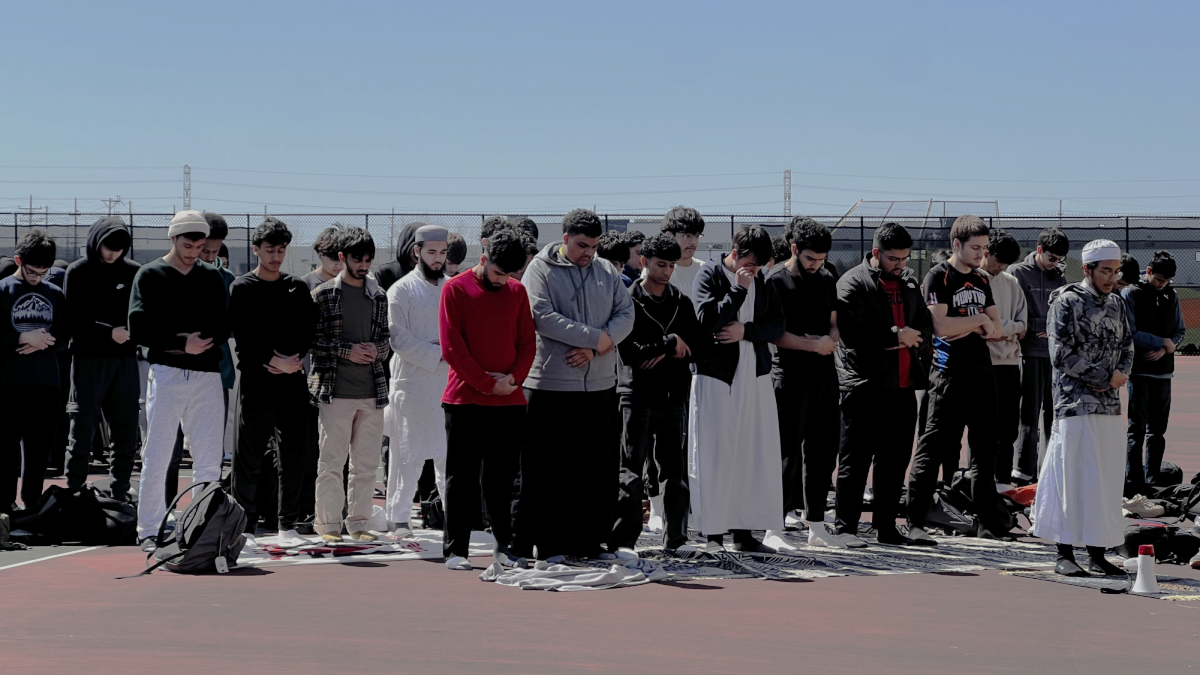
The Niles Township Federation of Teachers and Support Staff (NTFTSS), the union for teachers and support staff in D219, held a walk-in before school on Friday, Jan. 30. Supporting the nationwide strike against Immigration and Customs Enforcement (ICE), teachers from West, North, Central and Bridges high schools gathered in front of their respective buildings.
NTFTSS president and West computer science teacher Matthew Fahrenbacher helped organize the walk-in. According to Fahrenbacher, teachers wanted to support the strike in their own way.
“This week, there has been sort of a growing movement to have some more action related to what’s happening in Minneapolis,” Fahrenbacher said. “There was a more general nationwide call for action this Friday…Individually, we don’t have the power to make a lot of significant national change. The idea is…that more people are standing in solidarity together and are speaking against it. That actually leads to political power and change.”
U.S. history teacher Daniel Kosiba was one of many West teachers who participated in the walk-in. Kosiba also participated in a rally last December to show support for immigrants.
“It’s not just about ICE, but also about the state-sponsored violence that is being committed by the federal government against citizens,” Kosiba said. “As someone who believes in the rights and freedoms that our bill of rights is supposed to afford all citizens, seeing the government directly violate those, seeing innocent people being targeted, seeing any human being (regardless of what the constitution says) being treated like that or murdered in cold blood by the people who are supposed to protect us, that should be enough for all of us to want to do something.”
Senior Dania Aldridge believes the walk-in could have been approached differently.
“I was walking to early bird [class] and I [saw] a lot of teachers just standing outside,” Aldridge said. “I also saw some students, so I asked them what was going on, and they informed me it was a walkout for ICE…Honestly, I think it had good intentions, but I had to ask around to find out what was going on, meaning that I don’t think it spread any awareness about it. I think it could have been approached differently.”
Fahrenbacher commented on ways students can make a difference.
“Everyone has the ability to reach out to their senators to express their concerns,” Fahrenbacher said. “Social media is a powerful tool for people who want to use their voice…There are things that students can do to make their voices heard.”
Kosiba believes it is important for students to educate themselves about current events.
“Around the country, there have been calls for walk-outs [and] a lot of us teachers believe that it’s so important to teach students about what’s going on,” Kosiba said.